
Why unloading discipline matters
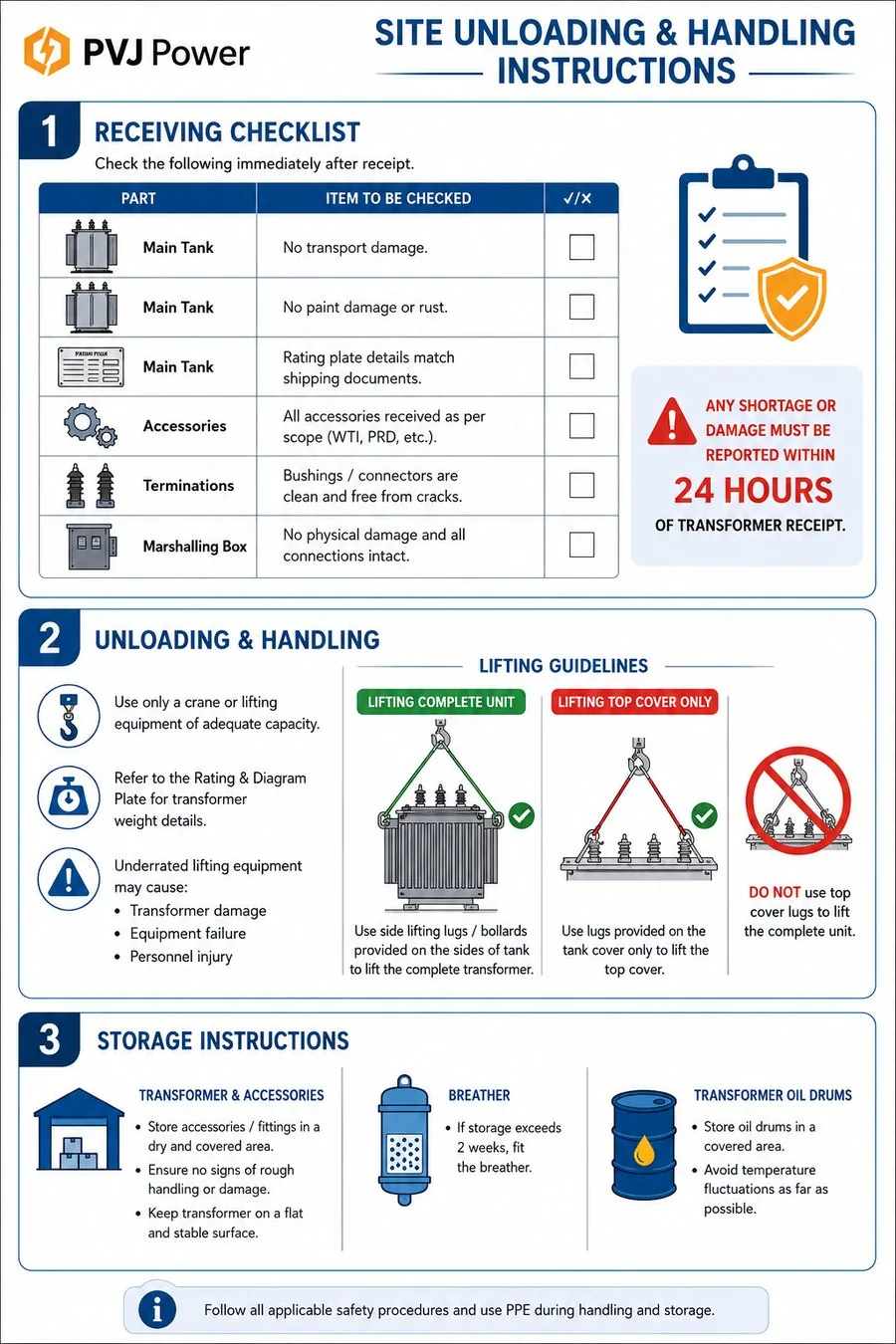
Oil Type Transformers are engineered equipment and must be handled like precision electrical assets, not ordinary cargo. Incorrect lifting, dragging, tilting or storage can damage bushings, radiators, conservator fittings, paint finish, oil seals and internal alignment.
A careful unloading plan protects the Transformer, reduces site delays and keeps warranty and documentation discussions clean after delivery.
Before the vehicle is unloaded
Inspect the vehicle, packing condition, shock indicators if supplied, invoice, packing list and visible accessories before unloading starts. The site team should confirm crane capacity, unloading area, approach road condition and final foundation readiness.
Check Transformer nameplate and dispatch documents against the purchase order.
Photograph all sides of the Transformer before unloading.
Confirm that crane, hydra, slings, shackles and lifting tools are rated for the Transformer weight.
Keep the unloading area level, barricaded and free from loose material.
Do not use bushings, radiators, valves, cable boxes or accessories as lifting points.
Safe unloading practice
Use only designated lifting lugs or jacking points. Lifting should be vertical, balanced and slow. The Transformer should not be dropped, jerked, dragged from the tank body or tilted beyond safe limits.
Use a spreader beam where required to avoid side loading on lifting lugs.
Keep personnel away from suspended load zones.
Lower the Transformer gently onto sleepers, rollers or the prepared foundation.
Avoid impact on wheels, base channels and bottom valves.
Verify that all accessories remain intact after placement.
Storage before commissioning
If the Transformer is not installed immediately, store it on a firm, raised and level surface. Protect it from standing water, construction dust, welding sparks, paint overspray and unauthorized handling.
Keep all openings sealed until installation work begins.
Inspect oil leakage, paint scratches and accessory condition periodically.
Store loose accessories indoors with proper labels.
Maintain clear access for inspection and future movement.
Report any transit damage immediately with photographs and documents.
PVJ Power note
For critical projects, PVJ Power recommends documenting unloading with photographs, preserving dispatch papers and coordinating with the service team before energization.
Discuss your requirement